
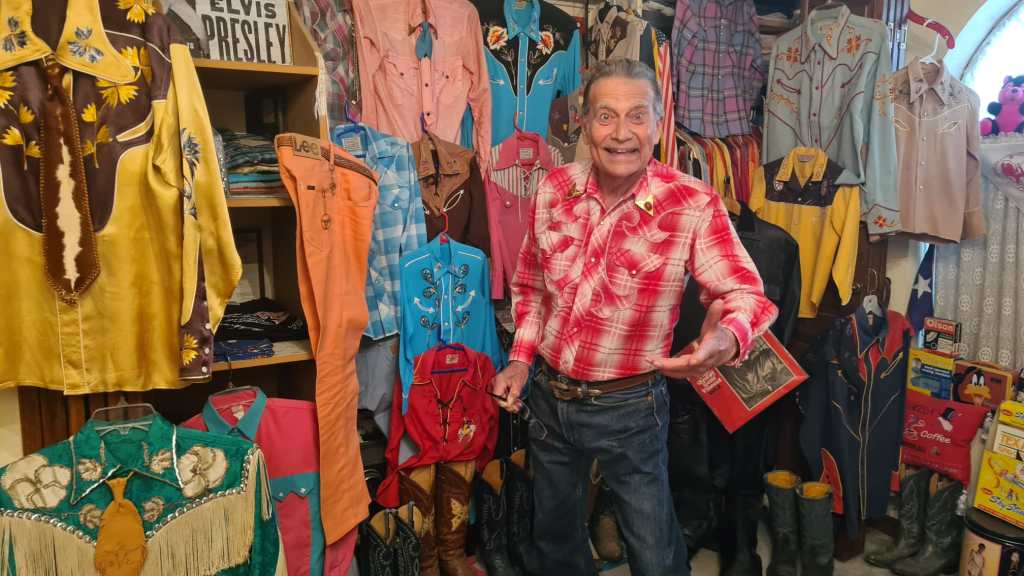
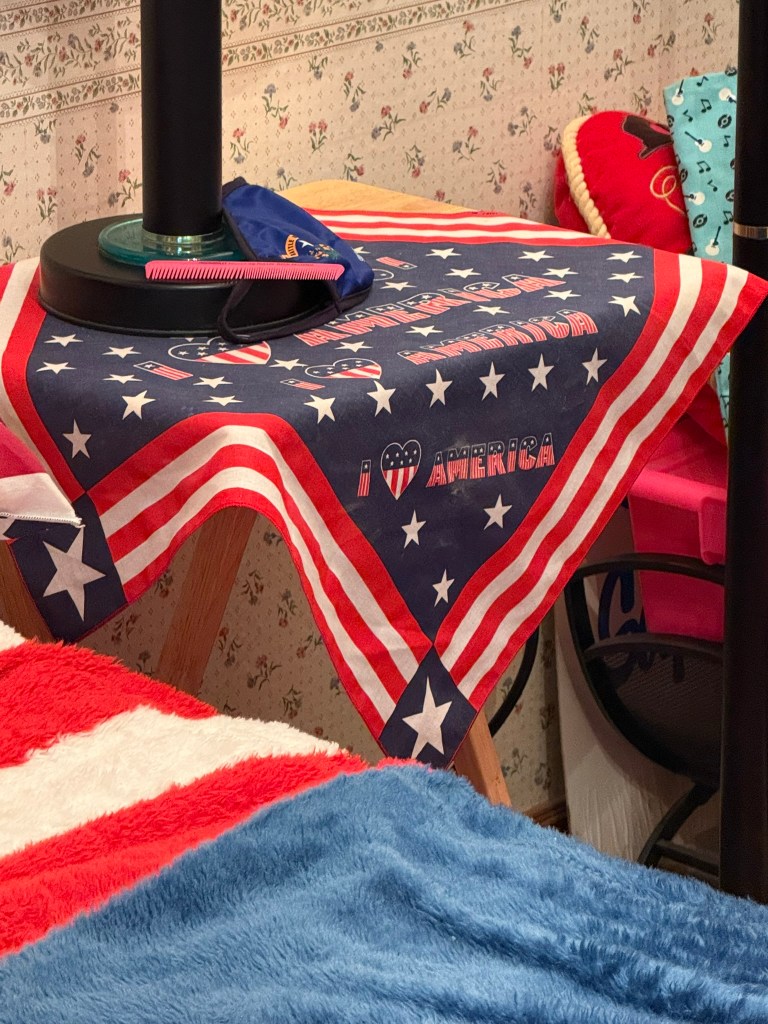
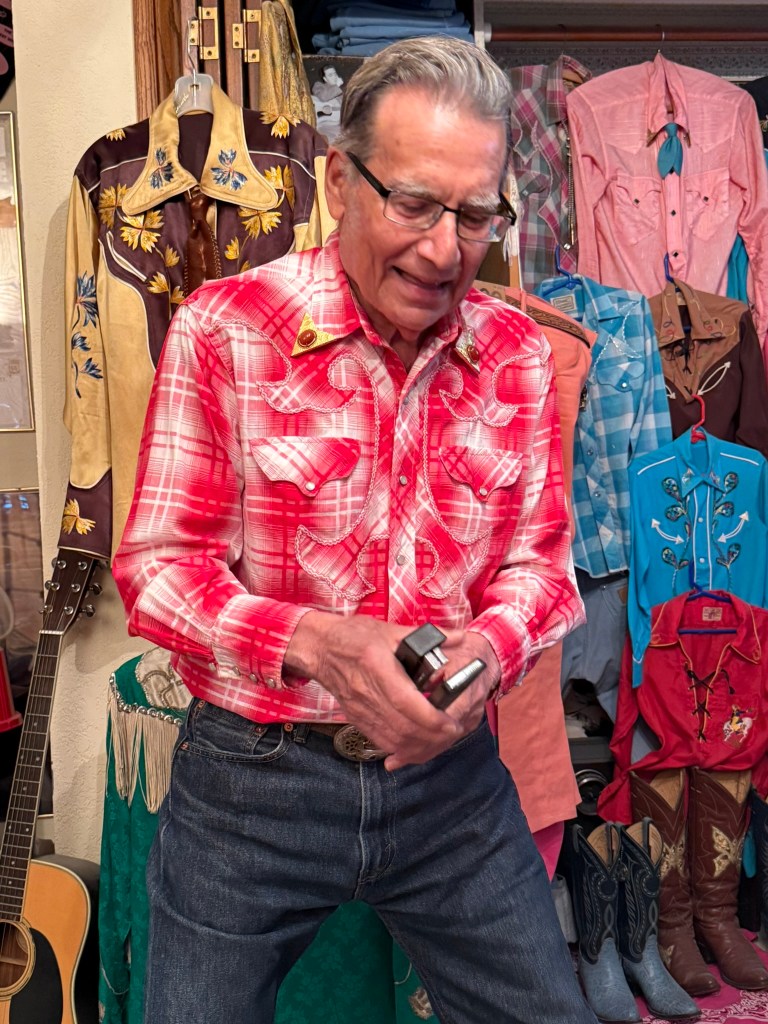
It’s not every day that a living legend invites you into his home for a tour, but, then again, Rockin’ Ronny Weiser is exceptional even among those who carry that label. The eighty year old founder of Rollin’ Rock released music from Gene Vincent, Ray Campi, Alvis Wayne and Charlie Feathers among so many others, carrying the scene through the Seventies and beyond. His house in the suburbs of Las Vegas gives no clues outside about the Rock n Roll treasures which line his walls inside, and everything he shows us has a story about a unique life in Rock n Roll.
Born in Milan, Italy, Weiser’s love of American music brought him to the USA as a teenager.
Okay, starting when I was six years old, I was in Rome with my mother. There were two girls. One had black hair and a blue dress, and one had blonde hair. They were American, not even teenagers, they were American toddlers. I was impressed… well, because the blonde one had a Schuco car. Schuco is a famous German toy manufacturer. That first experience with America. Then the second one came with the Tom and Jerry cartoons, and that really flipped me. I always sided with Tom, not with Jerry. Tom is my man. I love Tom. I consider him a hero.
The third one was at the beach near Viareggio. One day I hear my ‘Mambo Rock’ and ‘Rock Around The Clock’ [by Bill Haley]. And I thought, wow, this is great stuff. Fantastic. Then the next thing you know, my mother bring me a pair of blue jeans.
Okay, then we go to near Milano, to the Gonzalez snack bar: supposedly American food. So I ordered a cheeseburger. I see the kid next to me, he’s dipping the french fries in the ketchup, and I say, ‘what are you doing?’ I say, ‘why are you putting the french fry in the ketchup?’ He says, ‘well, that’s what we do in the USA’.
I had to go to America, and I did go in 1964, when I was seventeen years old. There was such a thing as an airplane ticket that you could cover pretty much the whole country with one ticket, you know, that was quite cheap. A lot of the planes were like four seaters. So it could get very rough at times. But anyway, I traveled the country and went to New Orleans, to Texas, to the frontier days in Wyoming, all kinds of crazy American stuff, you know, the World’s Fair was also going on in New York. It was all very exciting.
A funny thing happened, as soon as I landed. Here I am, I don’t know anybody. I take the subway or whatever from the airport, and they dumped me somewhere somewhere on some street near the airport soI started walking towards the YMCA. Next thing you know, there’s four Black teenagers that were not in a good mood. I would say their average age was between thirteen and seventeen. One pulls out a knife. I say, ‘Oh, Jesus’. I say, ‘Well, look, guys, I just came here as a tourist to visit the USA and to listen to Rock and Roll music’. One guy started to calm down when he hears ‘Rock n Roll Music’. Next thing you know, the knife goes away. We started talking about Fats Domino, Little Richard, Jerry Lee Lewis, Buddy Holly… about all the rock and roll stuff. Next thing you know, they invite me to a dinner at a diner, so we sit down and more Rock and Roll: Bill Haley this and Jerry Lewis that… what a great evening. A cool welcome.
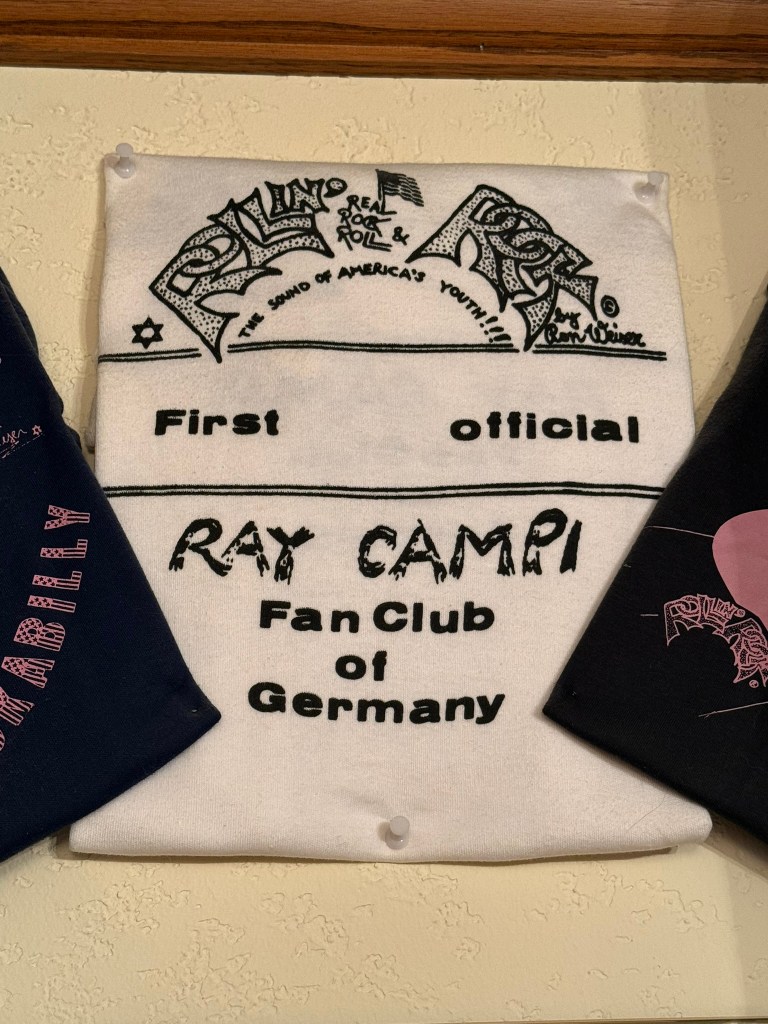
Weiser’s name is frequently linked with Ray Campi. ‘The Rockabilly Rebel’s career took off in the seventies when Weiser reissued his fifties recordings and then new music on Rollin’ Rock.
I was in Berlin at the home of Rock and Roll and Rockabilly fans. One of the fans plays this record by Roy Campi. He says, ‘you know this Roy Campi lives in Hollywood’. I said, ‘oh yeah?’ When I came back from the vacation, I called the information [hotline]. Back then we had information on the phone. I asked, ‘do you have a number for this Roy Campi?’ The lady says, ‘no, we don’t have any Roy Campi, but we do have Ray Campi’. I said, ‘well, Roy Campi… Ray Campi,…it’s all the same. No big deal.’
I call him up and I said, ‘you know, they played one of your records in Germany, in Berlin, and it was very good. It was called ‘Caterpillar’. Ray says, ‘oh yeah, ‘Caterpillar,’ let me tell you about it. So I drive over to his studio where he was working as a gopher or something, and he starts telling me about it. That lasts about twelve hours. Then he looks at the watch and says, ‘hmm, it’s time for me to teach school’. What? You’re a student? ‘No, I’m a teacher’. Gee, you’re a teacher? All right, you’re a teacher. What can I say, you’re a teacher.
I drive home, it’s like two or three in the afternoon. I suppose Ray goes home as well, or Roy, as they call him, goes home as well. I fall asleep, and the next thing I know I hear knocking – bang, bang, bang, and the buzzer – what the hell is going on around here? I go to the door in my pyjamas and stuff, not very rock and roll looking. I said, ‘Ray, Ray, what are you doing here?’ ‘Well, I forgot to tell you…’ Bam! 78s rolling down the hill, reel to real tape playing lasso games! Oh my God, that was another eight hours, ten hours, I didn’t quite remember.
One [song of his that I like] ‘Rockin’ and Rolling Towards Tennessee’, on which he plays all the instruments, just for your information. It’s a very upbeat type song. And the other one I like is ‘Don’t You Blame It On Me’, that came later, a few years later, but I still like that a lot. ‘Caterpillar’ is not my favourite of Ray Campi’s. ‘Rockin’ and Rolling Towards Tennessee’, that has more drive. Play them next to each other if you can, and you may agree with me.
Ray became a star with Rolling Rock in the seventies and eighties, and he deserved to become a star because he was totally dedicated to Rock and Roll music and Hillbilly music. He played on many other artist’s instruments. He would be playing the stand-up bass. He would be playing the guitar, the Dobro, the acoustic guitar, the electric guitar, the trash can lid
I would play the stapler on ‘Sexy Ways’ by Mac Curtis. Whose idea was it to have a stapler on a song? It just sounded cool. I still got it in the other room I was like, ‘after that one session tape. I could bring it in’.
I think I used it more for like… chik chik chik.
On one wall of Weiser’s archive is a huge photo of the man himself with Little Richard, and it’s the first thing your eye is drawn to.
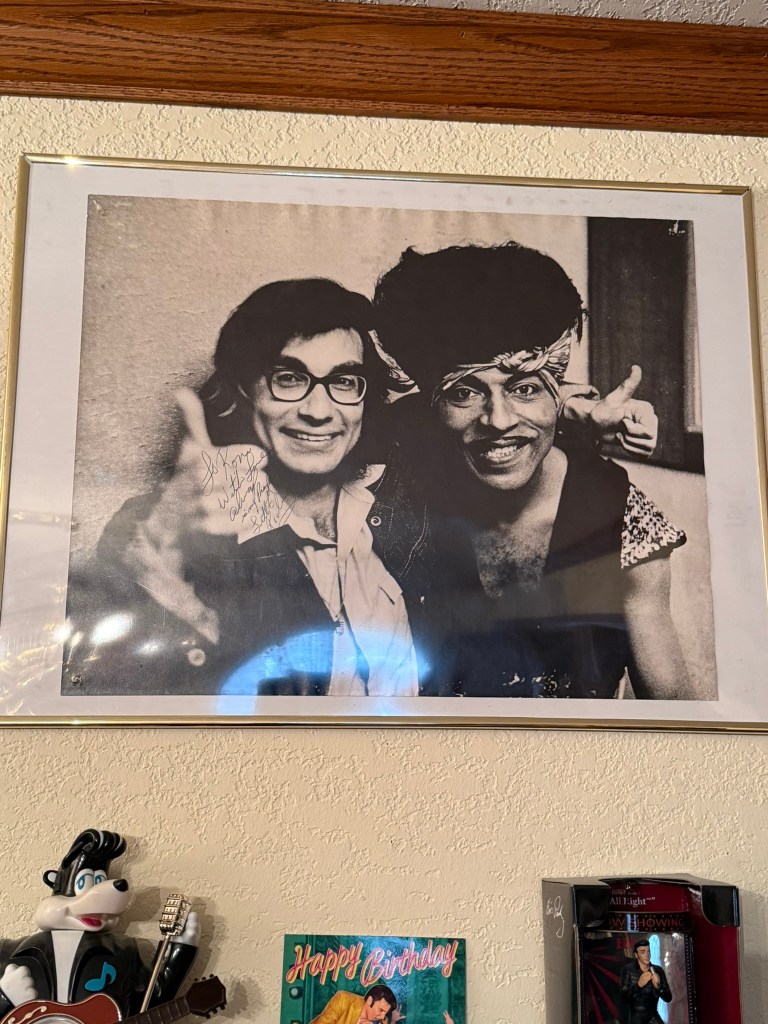
Little Richard was playing at the Whiskey at Go-Go in Hollywood, and I went there to see him, and I was shocked, amazed to hear how exciting and how good he sounded. Compared to [his recordings on] Specialty [Records]… it was even better than Specialty, which I would never believe that. Specialty is untouchable to me. But Richard, it was just something that I would never expect it to be like that. So incredibly exciting, and every song was coming in like ‘Lucille’ with a bass line, it could not be described how exciting it was. A friend of mine came along, he took the picture over there, and then what happened is that another show came up a few months later, and so my friend showed me this picture. I thought it was, ‘wow, pretty neat’. And I had it autographed.
I was fairly good friends [with Little Richard]. He knew who I was. I think I’ve been [to see him]maybe five times, not for long periods, but for like, I don’t know, five, ten minutes at the most. So with whom I was really good friends was Gene Vincent.
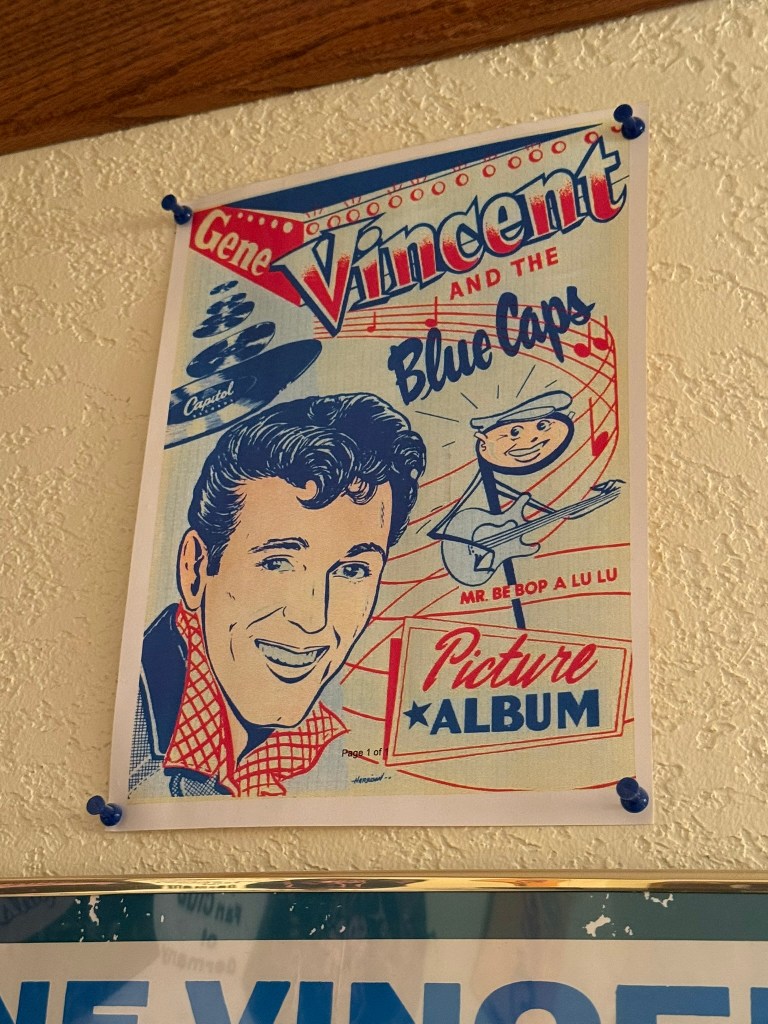
Gene was living in an apartment on Fuller or Fulton. I was with my parents, my brother was living on Hayworth Avenue in Hollywood, so maybe like three or four blocks apart. So now I had gotten already Gene’s phone address, I guess from the operator. I go in my car and drive towards his apartment, like I said, a few blocks away, and I see this convertible coming at the same time that I’m going there. I can tell right away it’s Gene Vincent. So he parks, I park, and I go towards the apartment. ‘Gene, I’m the founder of the Gene Vincent Little Richard fan club. Can I ask you a few questions?’ He says, ‘yeah, come on in, come on in.’ He started giving me soda pop and sandwiches and all kinds of stuff. It’s very, very friendly. You know, very low key, but very friendly.
As wild as he is on stage, he’s just as low key and timid off stage. It’s a contrast. So I go up there and sit down and sandwiches, Coca Cola, whatnot. We start talking, and we talk again about Wanda Jackson and Carl Perkins and Sam Cooke, always Sam Cooke and Fats Domino and Little Richard. Sam Cooke and Little Richard, I think, were his two best friends. We’re talking and he’s starting already to talk how difficult it is for him to find Rock and Roll musicians, players that he can play with. He tried to get in touch with some of the Bluecaps, but it fell through whatever.
Gene was a very kind, gentle person who was very upset that he could not find musicians that would play real Rock and Roll music. He loved Rock and Roll, and he loved many of the artists who where his friends like Fats Domino, Sam Cooke, Little Richard, Wanda Jackson, Carl Perkins, Jerry Lee Lewis…all these people were his friends. He admired them as rock and roll artists, and he also was very happy that they were his friends. But I guess he was not happy enough about what was going on with the music scene. His drummer was not playing Rock and Roll, the guitar player was not playing Rock and Roll. They were not familiar with Rock and Roll, and so he was quite upset about this fact.
In one corner, almost hidden next to the wall of vintage westernwear, is a small leather jacket and trousers. It’s part of Gene Vincent’s stage wardrobe and is likely priceless to memorabilia collectors. But how did Weiser get the suit?
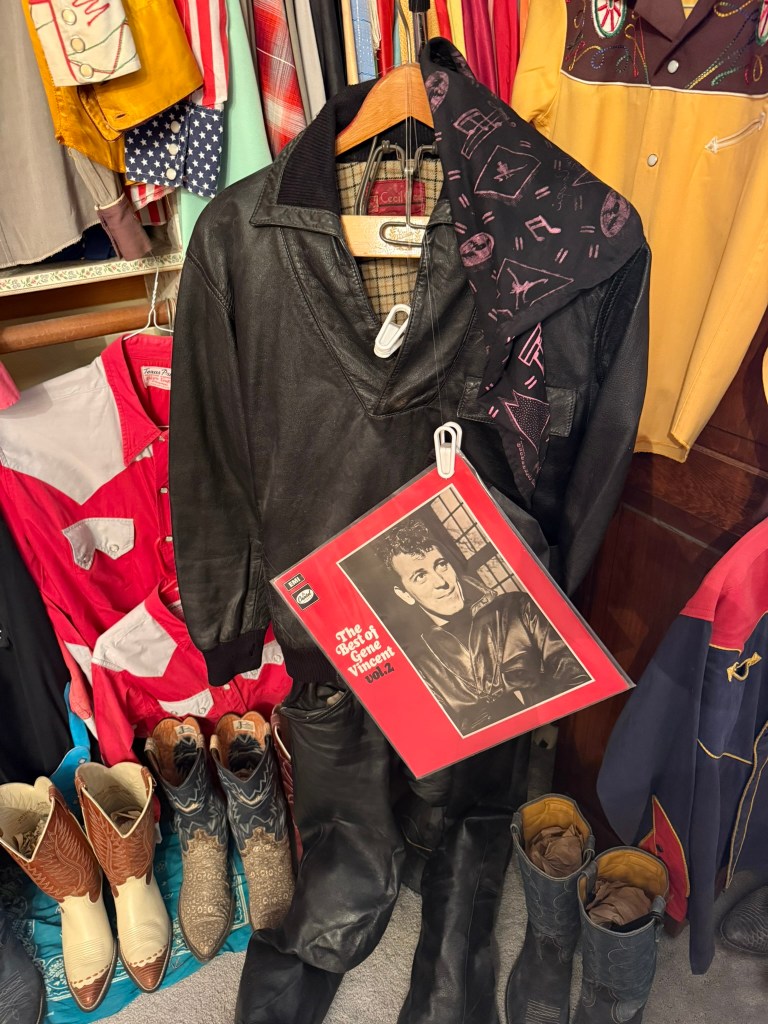
What happened is six months after Gene had died, I went to his parents’ apartment in Hollywood. You could see the Capitol Tower from the apartment if you just opened the door. I go in there and talked to the parents, how Gene was not served fairly by the music industry and so forth.
After half an hour or whatever, the mother takes the suit, gives it to me and says, you know, have the suit. I paraphrase. I don’t know the exact words. I mean, it’s been a while. I say, ‘are you sure?’ Yeah, yeah. I said, ‘well, maybe you can write saying that you’re giving me the suit so people will not think that I stole it!’ This would have been a classic situation. There were a few that were kind of shady. Not a lot of people in a forty-year period, a fifty-year period, but maybe a handful or less of people who are not very good. She wrote a couple of lines, which I still have in the fire proof files: ‘I gave this suit to Ronnie Weiser’. And that was it. Then I got this. It’s a wonderful thing to have.
How does it feel looking at it now? It feels very… what’s the word? Speechless? Yeah. Speechless. Everything that’s associated with Gene, all you have to do is just listen to his songs and words may not do justice to his songs.
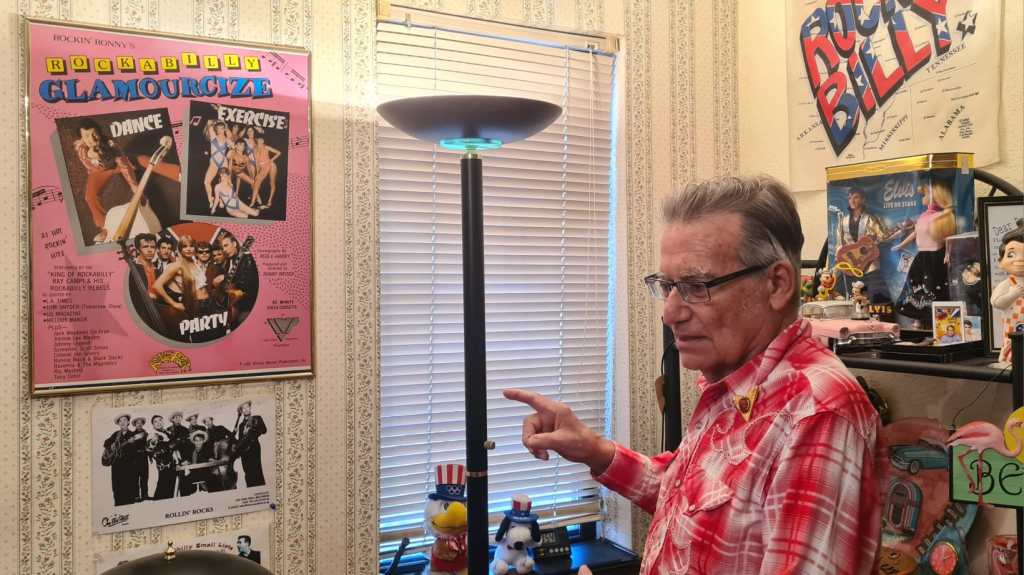
I’m proud of most of [my Rollin’ Rock releases]. Yeah, I would say 90% of my releases, I like a lot. I feel like that’s so important to only release what you love. Yeah, I don’t release things that I don’t like. All I can say is pretty much is keep on Rolling the Rock!
Walking through Ronny’s archive is an unforgettable experience, and hearing his stories makes you want to search through his back catalogue again just to imagine a fraction of what he must have experienced in a lifetime of Rock n Roll. We’re very grateful to Ronny and his wife Laurie for inviting us into their home to see their archive, and it’s a morning that will stay with us for a long time.
Kate Allvey
With additional thanks to John Alexander, Kyle Peterson and Phil Whyte.





Leave a Reply