In an apartment above a leather goods shop on Holloway Road, London, a thirty seven year old man ended his life by gunshot. His landlady’s body was found on the property too and an inquest later determined he was also responsible for her death. Friends theorised she’d complained about the noise in his apartment and it was a tragic accident.
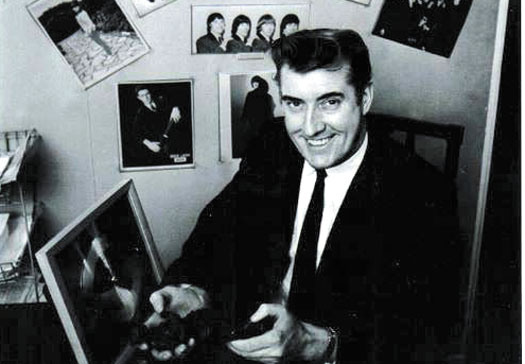
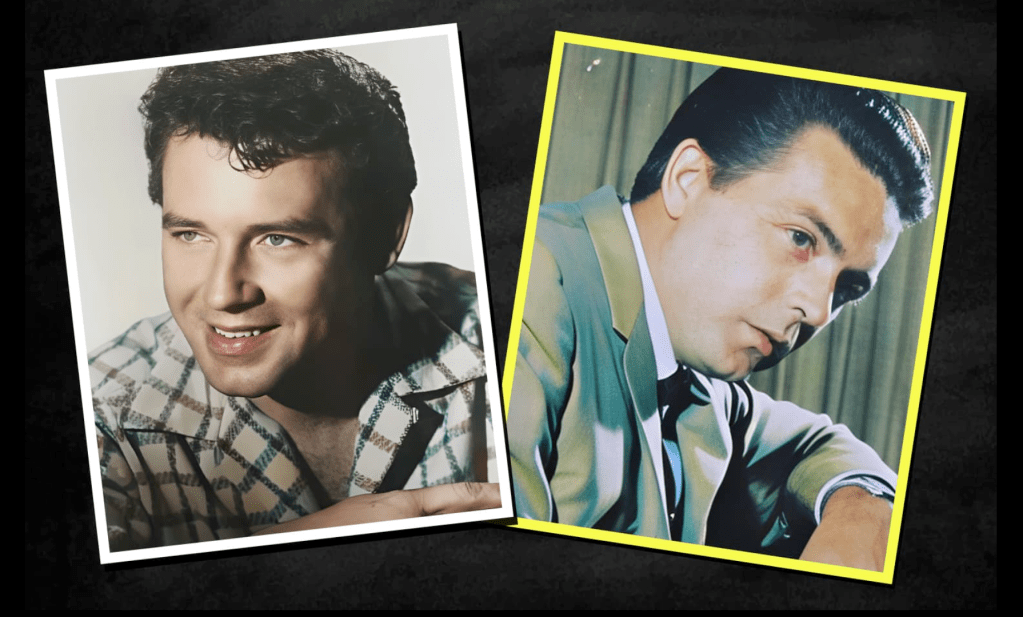
The year was 1967 and the man was Robert George Meek, better known as Joe Meek. His personal life was difficult, to say the least. Five years before, he’d been arrested for ‘persistently importuning for an immoral purpose’ – meeting men for sex – and fined £15. The case was covered in the press, and Meek found himself being blackmailed and pressured by gangsters because he was no ordinary person. Meek would be named the ‘Greatest Music Producer of All Time’ by an NME poll in the twenty-first century, and was one of the first people in history to recognise the potential of a recording studio as an instrument in itself. He wrote and produced the Tornados’ ‘Telstar’, which was the first record by a British group to reach number one in the US Charts in 1962. This earned him an Ivor Novello award in 1962.
He produced more charting singles for John Leyton, Heinz, Michael Cox and the Honeycombs and the best part? His home studio at 304 Holloway Road, Clem Cattini, drummer for the Tornados, recalled: “The studio was bizarre. I mean the drums were in the fireplace. But it was incredible, the sounds he could get out of that studio, the equipment he used and what he recorded ‘Telstar’ with. Modern equipment could not get anywhere near it. Musically, Joe was a moron, and I don’t mean that in a mean way, but he didn’t have a clue. But in terms of sound production he was incredible, the forerunner of the independent producer. He was just a genius with sound.”(source)
Meek faced increasing pressure as 1967 began. When seventeen year old Bernard Oliver was murdered, police announced their intention to investigate every gay man in London, which would have been a terrifying prospect. That, plus a long running and threatening dispute with notorious gangster Ronnie Kray, and Meek’s issues with his mental health and drug usage, must have played a part in his untimely death, though the exact circumstances which led to his passing remain a mystery.
After his death, Cliff Cooper – founder of Orange amplification – went to his estate sale hoping to buy some audio equipment, but instead bought sixty seven tea chests full of tapes for £300 (around £5000 in 2025). They remained in storage, largely uncatalogued and unheard.

Meanwhile, Joe Meek’s fame continued to spread. Alan Wilson of Western Star Records takes up the story.
“I’ve been a Joe Meek fanatic since I was about ten. In those days, people used to say, ‘Who the fuck’s Joe Meek? I’ve never heard of (it) him’. But now, people are more aware of these things. I didn’t know who he was at first. All I knew was certain records sounded fantastic to my ears, and certain records a bit mediocre. I was collecting records, and in those days – I mean, vintage hadn’t been invented then, that’s a new word – in those days, there were junk shops. You’d go in a junk shop and you’d buy a second hand fridge or a second hand sofa. It was from house clearances, you know, when people had died or gone bankrupt or whatever. I used to buy singles for pennies – there’d be piles of records. Sometimes you’d find a record, it’d be the right label, it’d be the right era, but I’d never heard of the artist. Okay, I’ll take a punt on that, I’ll buy it! Once in a while, the record would really jump out of the speakers and just sound massive, but I’d never heard of the artist. Then I started to notice that on these good second-hand records, it would say in tiny little letters, somewhere on the label, it would say RGM. And I thought, what was that? So in my head, I thought RGM, ‘really good music’. That’s how I kind of remembered. So, if I found a single, and it said RGM, and I’d never heard of the artist, I’d buy it because of the RGM. I now know that it means Robert George Meek, but there was no information, there was no way of finding out any information about it then. It wasn’t until probably the nineties I realised who Joe Meek was. And I’ve recorded as many Joe Meek artists as I can over the years while they’re still alive. I’ve talked to as many as I can. I’ve gleaned as much information about them as possible.
When I was with Sharks, I got a record deal with Cherry Red Records. And after that, after the Sharks finished or whatever, I’ve always carried on working with Cherry Red. At one point I was managing some of their catalogue, [and] I still do a lot of mastering for them and tape restoration and stuff like that.
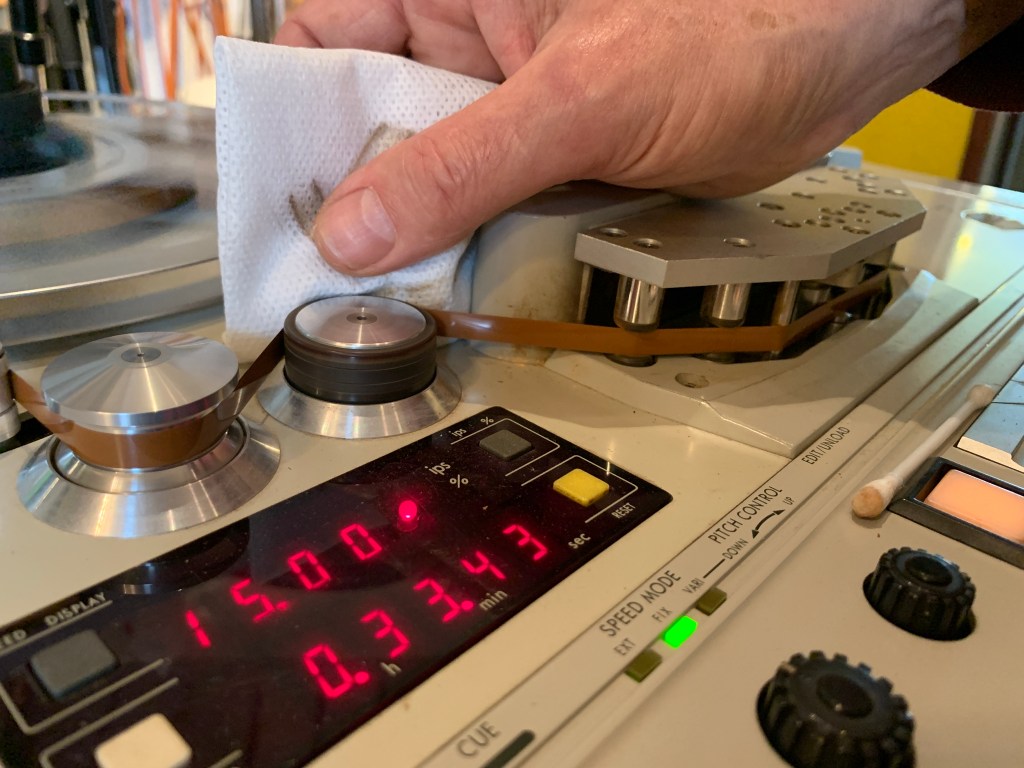
One day, just at the beginning of the lockdown, they called me up and it was Iain McNay, the chairman of the company. He rang me up and he said, ‘You like Joe Meek, don’t you?’ I said, ‘yeah’. He said, ‘What do you know about the Tea Chest Tapes?’ I told him what I knew, and I said, ‘Well, I don’t think you’ll ever get your hands on them, because the guy who owns them, Cliff Cooper, he’s not interested in selling them’. He answered, ‘well, actually, we’ve been negotiating for six years and we’re very close to closing the deal. If we get the deal, what are your thoughts on that?’ I said, ‘Well, what are you buying? because it’s analogue tape, which is an unstable format. You might be buying a pile of dust’. Because I do their tape restoration, he said ‘I’d like you to go up there and inspect the tapes’.
I mean, I’ve known of the Tea Chest Tapes. They’re like mythical, you know. I’ve known of their existence for twenty or thirty years. But I never thought I’d ever seen them, let alone have them in my possession. They were stored in Waltham Abbey in a big warehouse and I drove up there to inspect the tapes. Cliff Cooper’s a lovely guy. I persuaded him to let me take away three tapes to test. Luckily, Cliff’s looked after those tapes and they were in pretty good nick!
So the deal went through. I then got the job of digitising and restoring it all. I think there’s been about ten CD box sets have come out since. Plus I’ve managed to get a license to do the vinyl releases. So I’m releasing all these vinyl 10 inchers, which has been just wonderful for me.
You can’t believe what’s on them tapes. I took away three tapes on that occasion I just mentioned, and the first tape I listened to was all unreleased Tom Jones. It doesn’t say Tom Jones on the tape box mind you, because there’s very little documentation with this stuff. You’ve just got to listen to it and try and figure out of it. And there was nine – on one real – unreleased Tom Jones tracks. This was when he was called Tommy Scott. The other one was Cliff Cooper’s old band The Millionaires. I took three random tapes that didn’t say anything on the boxes of these tapes, and often, even if it does say something on the box, it’s wrong because Joe quite often reused tapes.
There’s unreleased Marc Bolan. There’s unreleased Ray Davis [of the Kinks]. There’s… before they were called Status Quo, they were called the Palominos…there’s them. There’s Jonathan King – I know he turned out to be a bit of a wrong ‘un, but musically he was fantastic. There’s all sorts in there.
I digitised every tape and record. Luckily, when lockdown happened, that was exactly when we got the tapes. So, I had two years of just painstakingly listening and going through these tapes and I would say we’ve not even come close to scratching the surface. I’ve listened to every single track. I can’t identify every track so we’ve got other people doing that. There’s a guy called Craig Newton who runs the Joe Meek Society, who’s an absolutely brilliant resource, he’s a real expert on Joe Meek and quite often he’s identified stuff. But, even with their help, there’s still loads we can’t identify. It’s just knowing that music inside out and then sometimes you’ll say, ‘oh, you know, that sounded like it’s Clem Cattini, you know, the person counting the song in’. So you’ll ring Clem and say, ‘was that you?’ And he’ll go, ‘oh yeah, I forgot about that’. Then he’ll tell you a few other people who might have been on the session. It’s like Colombo times a million really.
Sometimes, we’ve had emails from people, because that was really big news when the Joe Meek tapes were sold to Cherry Red. I was even interviewed by Mojo magazine! I’ve never been in Mojo in my life, and never will ever again! But it was really big news because it was the biggest chunk of British rock and roll history to be unearthed for…since forever really. We were getting emails from people saying, ‘My uncle played in a band’. They recorded at Joe Meek’s studio and the song was called, I don’t know, ‘Be My Baby’, so eventually you go through the tapes, you find a song called ‘Be My Baby’. Oh, that was that email that person sent and so you contact them, ‘yeah, that’s him’. There’s just loads of really weird stuff like that.”
With now ten released compilations from Meek’s archive, there’s no danger that we’ll run out of gems to rediscover in this century. Who knows what could still be in the Tea Chests, just waiting to be heard by eager listeners across the world?
Kate Allvey
Pick up your piece of Joe Meek’s Tea Chest Tapes right here

 Rip It Up Magazine
Leave a comment