
The old adage is to never meet your heroes, but Alan Wilson, head of Western Star Records, is probably the closest to a hero that the UK Rock n Roll scene has. It’s been twenty five years since he opened Western Star Studios, inviting in some of the UK and beyond’s best acts to record.
Bob Butfoy of Jack Rabbit Slim recalls the moment he met Wilson fondly. “I first found out about Western Star by accident. My band, Jack Rabbit Slim, was in its infancy, and we’d done a rough recording in some guy’s cellar that I wasn’t very pleased with. I’d set about finding a proper studio and label, and stumbled on a link for Western Star. After checking out their site, I messaged Alan to test the water. Within hours Alan had called me, and we were chatting all things bands, rock n roll & recording. I’d found a kindred spirit! We hadn’t met before but both knew of each other from our previous bands – Alan [had] The Sharks and [I had] Bob and the Bearcats. It was arranged that JRS would go to the studio and record so we could see how things went .
Alan had released CDs by Bill Fadden, [who was] quickly becoming popular on the Rockabilly scene, so I wrote a song that I thought would be in that style, hoping it would impress Al. We cut that first and Alan asked if we had anything else … tentatively I said I had a song that was a bit different and hoped Alan would approve… We cut ‘Cherry Pie’, when we finished & listened to playback. Alan swung round on his chair and said, ‘you can come and record here anytime you like!’”
From Wilson’s perspective, it’s been a great twenty five years. “Well, it’s a good feeling,” he explains. “When I first started it, I thought, ‘well, let’s just see, it’ll last two years’, you know, but all of a sudden it’s just crept up and it’s now twenty five years. Yeah, I mean, in some ways it feels like yesterday. In other ways, it feels like a lifetime ago. But the thing is, I’m doing what I love to do. It’s hard, working these long hours, but it’s because I’m working for myself. It’s all right, you know. I used to work in other studios before, for other people, and some quite big studios, actually: nice studios with like high-end famous clients and stuff. But before that, I used to have my own little studio in my parents’ garden in like a big…well, it was a shed basically, but it was like a kind of an outbuilding, but it was maybe twenty foot by twelve foot and we sound-proofed it with a few mates, and this was in the very early eighties. I got really interested in sound, and then I kind of progressed from there to a purpose-built studio inside my house.
Then I got divorced, so that studio went with the house. That was in about ’94, then I ended up working in a place in Bath, where I’m from. It’s a city full of pop stars, all the film stars and pop stars live there. There’s a lot of nice big recording studios there, and I ended up getting a job in a really nice one on the River Avon. [I] worked there for probably four or five years, something like that. Then they got closed down by the government because they wanted to build a bypass straight through the property, so they got given four million pounds to fuck off, basically. And so they did: they went somewhere else and built a great big brand new studio, state of the art place, which lasted about a year, and then they just went bankrupt. But I didn’t go, I didn’t move to the new place with them.
By then, I decided I was going to start my own place. When I started, I built a little studio on the side of my house at the time. So that was the second time I built a studio on my house, two different houses. Then I outgrew that pretty quick and I moved out of there to the building I’m in now. I’ve been in this building now twenty years. I’m on a business park now. So yeah, it’s been a quite a journey really.
I didn’t want to work for an employer anymore. Basically, I used to work when I was really young: I used to work for an insurance company. I was in an office, you know, suit and tie job. I absolutely fucking hated it. It wasn’t me at all. It’s really good money and all that and company car and benefits, you know what I mean? But it just really wasn’t me. So I just want to do something. The only thing I’m really any good at – not that good at it – but the only thing I’m remotely good at is music. I thought, ‘yeah, it doesn’t matter if I’m earning a quarter of what I was earning before as long as I’m happy’. So that was really my motivation is to do my own thing, just to do what I want to do in life, you know? Because you only live once, don’t you?”
So, how does he decide which bands join the Western Star family? “To me, the music is, important, but the criteria really for getting on Western Star – to be released by Western Star – is mainly, I got to like the people. Though, you know, all sorts of bands come in and the reason my studio has been so busy over the years is because I made a decisionn very early on. Once I started the label, I decided I was like Sam Phillips: he had Sun Studios and then he had Sun Records. I decided early on I was only going to release music on Western Star that I recorded within these four walls myself, because I wanted to feel like attached to the music in some way, rather than being one of those labels who releases whatever comes through the letterbox that week, you know? And then, pretty early on, I realised that once you release a record with someone, you’re kind of forever joined at the hip, to a certain extent. I don’t really want to be joined at the hip with an asshole. So if someone came in the studio, they might have been great musicians, but if I didn’t really like them personally, it just wasn’t going to happen. For me, it’s more of a personality thing with the people.”
The Wolftones were just the kind of band Wilson was looking for, as Graham Sanders recalls. “Myself and the other members of the Wolftones had written some songs and wanted to record them, but they needed to be recorded right. A mutual friend of mine and Alan’s said, ‘why don’t you get in touch with Alan Wilson at Western Star Records? He will give you the sound you’re looking for!’ I contacted Alan and after a long and pleasant conversation he invited us down to record our first CD, ‘Neo Rockin Bluesabilly’. From the moment we turn up, like every other occasion, Alan put us straight at ease and asks what sort of sounds we’re looking for, then after we’ve laid down our guide track, that’s when Alan starts to work his magic. We go in to put our individual instruments, [and] he encourages you play better than you thought possible. Some of his ideas are inspirational and you go away feeling you have brought your best self to the table.
Then comes the mixing: this is when Alan really shines! He must have the ears of a musical god on how he mixes the individual instruments into songs, but always asking your thoughts and listens to any suggestions you might make. That’s why I think he’s the best in the business.”
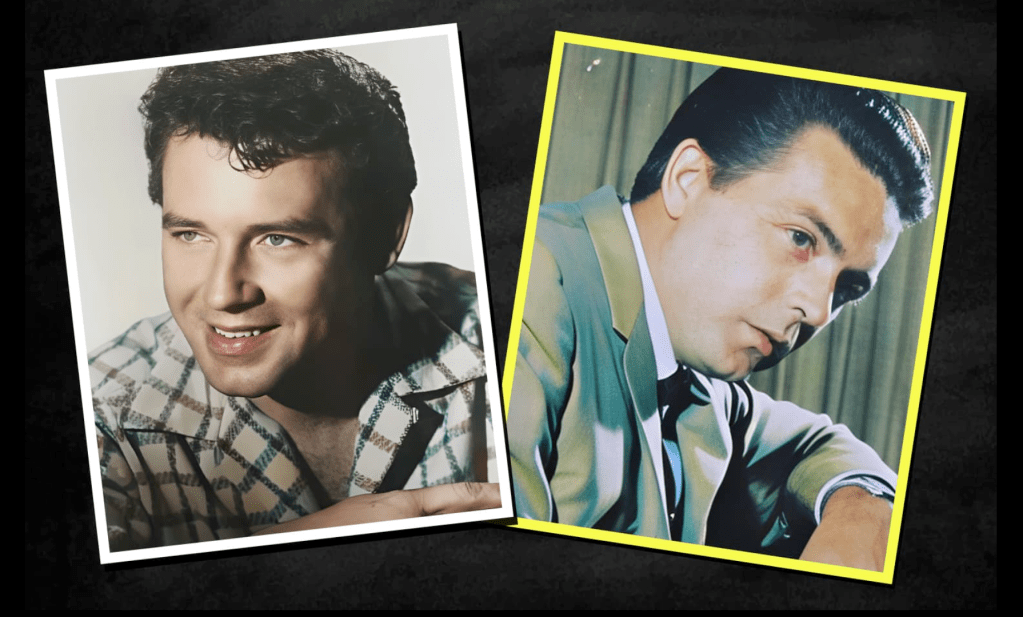
It’s not just hot current bands who find their way to Western Star, as Wilson shares. “I’ve been lucky to have on my label and in my studio a lot of my childhood heroes, because I’ve been into rock and roll music since I was a little kid. I was a fanatical record collector in my early teens, collecting old fifties and sixties records, you know? So I’ve done several albums here with people that I just revered, and people like Chas Hodges, John Layton, Mike Berry, you know, British artists from the fifties and sixties. Luckily I’ve taken lots of photos and I’ve written books, so sometimes I look back at those things that are written down and seen with photos and think; did that really happen to me. It feels incredible. I’ve got that…I don’t know what you call it, is it imposter syndrome or something like that? Where I sometimes think like this shouldn’t be happening to me really, because it’s me. Does that make sense? But then I see the photographs and I read the writing and I think it really did happen, you know?”
One legend sticks out in his memory clearly. “Chas Hodges. Before he was in Chas and Dave, Chas Hodges played bass for Gene Vincent, Jerry Lee Lewis… he did the Outlaws and that was Joe Meek’s house band, so he played on all sorts of hit records that Joe Meek produced. I’m just a fanatical follower of musicians and session players and that sort of era. So to me, Chas Hodges was God and I was lucky to become a personal friend to him. And in fact, I recorded his solo album and even played guitar on it. So that, for me, having looked up to that guy all my life, the day he rang up and said, ‘can I put an album on Western Star and do you want to produce it?’ That’s probably the moment, really, when I just thought, well, this is ridiculous, you know. My wife and I used to go and watch Chas and Dave all the time, you know, and I’d spoken to them in gigs, bits and pieces and I’d never really dreamed of ever achieving this. I just said, oh, I can’t believe he’s coming here! We just hit it off and it came down on a few other sessions and then one day he just rang up and said, ‘is there any room for me on your label?’ I just couldn’t believe it.”
Of course, that’s only part of the story. Between childhood heroes and the finest new music, Western Star has changed the musical landscape of the UK’s Rock n Roll scene and beyond…and that’s not to mention the Rockin Roundup or any of the other avenues that Western Star has explored…
Kate Allvey
Part Two of our interview with Alan will be posted next week!
Check out all the fine releases from Western Star right here

 Rip It Up Magazine
Leave a comment