
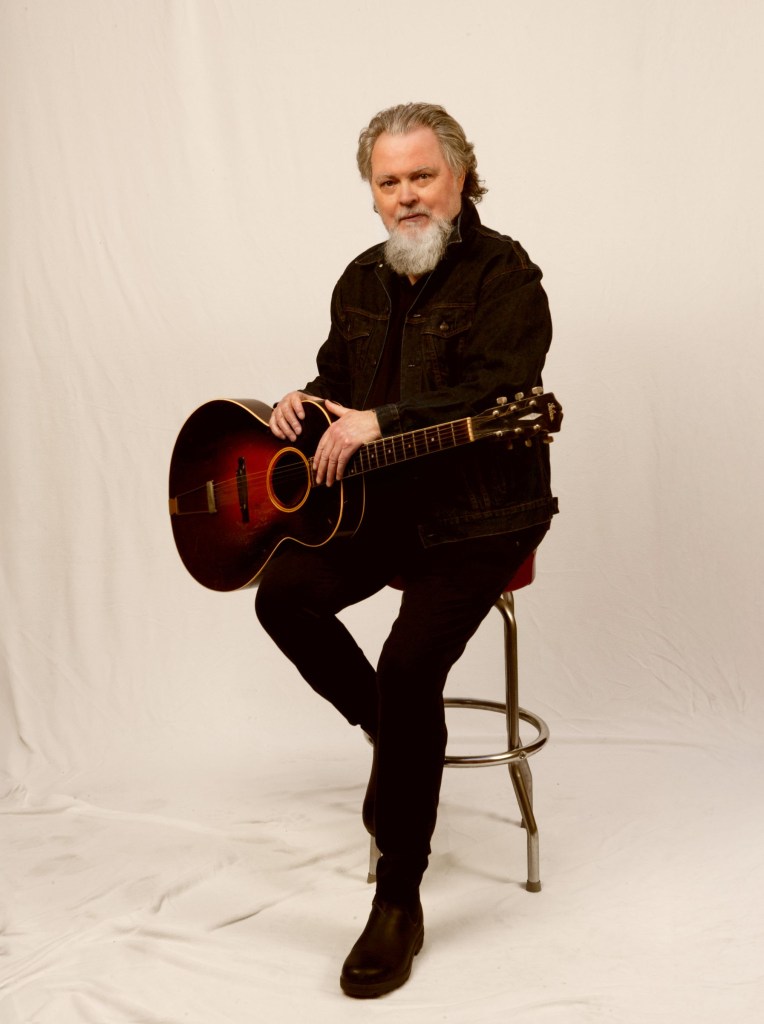
If you asked Jamie James what kind of music he makes, he’d tell you he’s a blues man. “It all comes from the blues,” he explains. “It all comes from it all comes from down there, Mississippi and in that Delta region. And that spread over and into like Jimmie Rogers that did the country, you know, the singing breakman from the late 1920s. But even he grew up close to the the plantation. Any time you listen to any rock and roll at all: Chuck Berry or Jimi Hendrix or Deep Purple or whatever…Led Zeppelin, it’s all blues-based. Beatles? It’s all blues based. Rolling Stones, all blues based, you know, and a lot of people might not be aware of that. But I really feel they should be because it should never stop being in the spotlight of blues.” His latest solo album, ‘Straight Up’, could easily be called blues too…but under the surface is always a deep love for Rock n Roll.
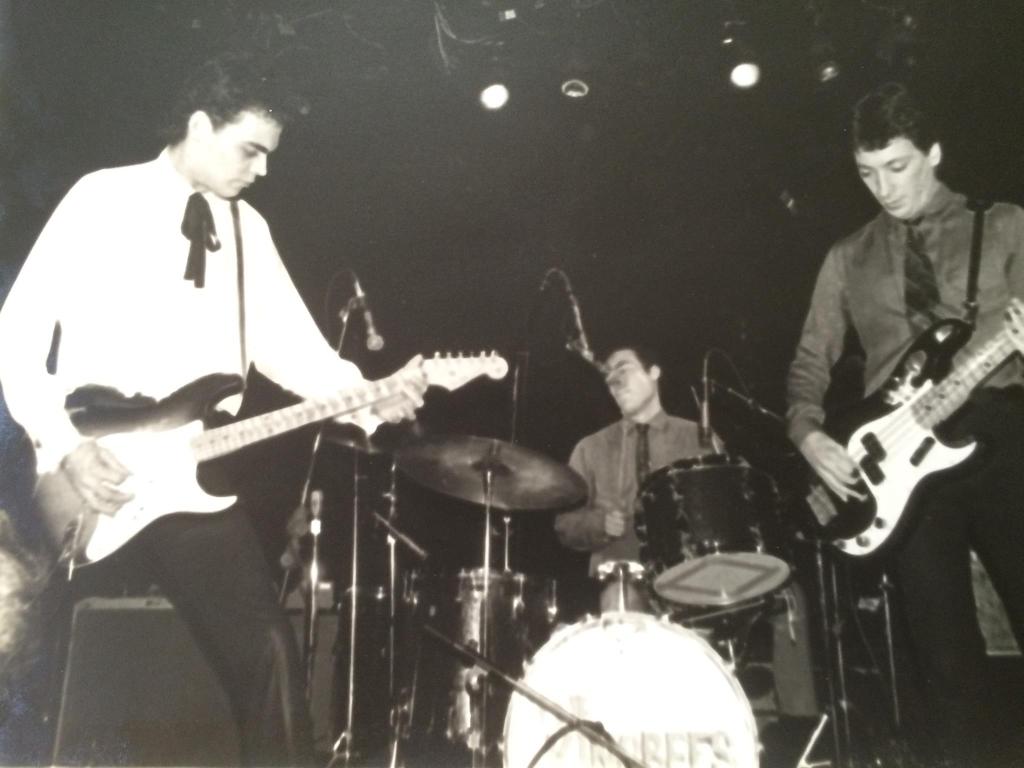
The spirit of music caught James young, though he’s hesitant to label the genre. “Well, there wasn’t so much the term ‘rockabilly’ because like that was a term that wasn’t being bandied about yet in Los Angeles. But I remember that rock and roll is always grabbed me. I mean, you know, Elvis Presley, I was born in 1953 and Elvis Presley was on the radio a lot. And it just it just had that thing to it, you know, yet at the same time, he could come up with it with a number like ‘Heartbreak Hotel’ that was still, in its way, riveting with even with a slow beat, you know. But and then of course, the Beatles. There was like a lot of stuff on the radio on those days. So it was just wonderful, you know, wonderful. And it’s mood changing, isn’t it? You know, it changes. For me, it’s a good song can change my whole outlook on life. There was definitely a light bulb moment for me. There’s been a couple of them. But the very first one I remember was it was probably around 1964 and maybe 65. I don’t remember the exact year. But there was music coming out of a basement down the street. And that’s a small town I grew up in: Woodstock, Ontario, Canada. And there was there was live drums. And I recognised it because every year, my mom would take me to hear the marching bands, you know, on Poppy day to hear the drum and fife corps. And I loved the excitement of the live drums; I went down and I looked at these guys, these older guys, teenage guys, and I must have been maybe eleven or twelve and they were playing. And on the drum it said the King Bees. And I just ran and I said, “well, I’m not just here. I’m not doing…like, forget being a fireman. I want to be a King Bee.”
Forming the King Bees seemed like a natural step for the guitarist in 1979. “When I when I finally was ready to break out and start my own group as a singer, because I had always just earned my living being basically a guitar player and a songwriter, but now the singer, so I took up voice lessons with this wonderful teacher named Gloria Bennett here in Los Angeles. And when I was ready to do my first show, I called Doug Weston at the Troubadour. He owned the Troubadour on Santa Monica Boulevard, and I played there before as a guitar player with a couple of different bands. And I said, ‘Doug, I’ve got my own thing’. And he said, ‘what is it like?’ I said, ‘well, you know, we do original stuff, but we do some Buddy Holly’. ‘Oh, Buddy Holly, you know what? this Sunday night, I’ve got a Rockabilly show’. I said ‘Rockabilly?’. I went to I had an inkling of what that but I don’t even remember Buddy Holly being referred to as Rockabilly. It was always when I heard it on the radio was just pop music, ‘Peggy Sue’ and ‘Maybe Baby’. Those were like pop hits, you know? But anyway, he used that term ‘rockabilly’. And I said, ‘yeah, we’re there. We’re rockabilly all the way, whatever you want!’ And so we went and did this show and and it we killed it. It was packed. And even though my knees were knocking throughout the whole show with nerves that were as raw as sushi, I got through it somehow.”
That wouldn’t be the first time James got a lucky break. Halfway through sharing his advice for musicians, he pauses. “The first thing I’d say is, you know, be prepared and remember frustration is a good thing. If you’re not getting frustrated, you’re not working hard enough. And just be prepared for a lot of repetition. You know, don’t let you don’t cheat yourself, make sure you don’t move on to the next chords that you’re learning or whatever it is you’re learning, make sure you’ve mastered it before you move on and roll your sleeves up and just do the repetitions, do the work. If you really love it, it’s not going to feel like work, you know, and don’t be afraid of being good. Practice, practice, practice and challenge yourself. And then when you finally do get a chance to perform professionally: if the tickets are $5 a ticket, give the audience a $15 show. Just remember that as long as everybody you generate interest and money, you’ll always be asked, you’ll always have work. So go in and if you’re getting paid $100 to play, do a $300 show minimum. I actually got that from Keith Moon, believe it or not. I lived in London for two years in 1971 and 72. And I had to get a straight job. I went over there. May I tell you the story?” How could anyone refuse an invitation like that from a guitar legend?
“Well, when I was 18 years old, 1971, my mother had cut an article out of the local paper saying the Beatles had just started a company called Apple Music or Apple Corps, and they were looking for songwriters. I had been writing songs for about since I was 13 when I got my first electric guitar. And so I had quite a few original songs. I bought a plane ticket from Toronto to London, and I got there on a Saturday morning, and I went straight to Apple on a Saturday. It was drizzling on Saville Row where they did the famous performance on the roof. I knocked on the door and this security guy opened and he goes, ‘hello, may I help you?’ I said, ‘yes, I’m here. I’ve got my guitar and my songs. And I’d like to perform my songs for someone, please’. I think he took pity on me because he said, ‘well, well, young man, it doesn’t work that way. You have to go through the proper channels, but come in for a moment, get out of the rain.’ And I remember there was like a candy dish or something. I was starving. I turned around eventually and walked down those stairs just dejected, Suddenly I found myself walking through Piccadilly going, ‘you know what, I forgot I don’t have a plan B. I do not have a plan B. I just don’t have a plan B’. And then suddenly in Piccadilly Circus on a Saturday packed with people, I see this face I recognise and he was a guy I knew: I didn’t know his name, but I saw him in my high school back in Canada. And we just started talking, long story short.
Anyway, we hung out and he was glad to see me as I was him. And he said I could crash at his place for a few days and follow me and a little bedsit on Fulham Broadway. He got me at this job. He was working for a company called John Michaels clothing company and they had these shops called Guys and Dolls and Guy and they had a little shop in Soho called the Westerner and that’s where I worked. It is a tiny little shop. And we sold these cool fringe jackets from Spain and Spanish boots and regular denim shirts. A lot of music people used to come, and I thought, ‘this is perfect. I want to find a music job working in this shop.’ So everyone that I would find tas a musician, I would say ‘hey, by the way, I’m a guitar player ’ and I eventually did get a nice thing out of there. But one day this white Rolls Royce pulls up and this driver gets out and he opens the door and in walks Keith Moon. And I couldn’t believe it. And he was in a three piece satin tuxedo. And he said, ‘if you lock the door behind me, I’ll spend more money today than you’ll make all week’. I was by myself that day. It was a tiny shop and his driver, this guy named Dougal, went off to get him a six pack of beer. I locked the door and Dougal comes back and he gets his beer and Dougal takes off. And so all day long I had Keith Moon in the shop with me while he tries all these different clothes because he wanted to get out of that satin tuxedo. It was a wonderful time. And I’m thinking to myself, ‘where are my friends to see me now in this moment of glory with Keith Moon, you know?’ And I remember asking, I was saying ‘Keith, I’m a young musician and stuff. If you were to tell me one thing, what would you say?’ (as we were winding down after he was in there for about three hours and he spent a lot of money). And he said, ‘I remember when the Who’s First American tour and being in Chicago and thinking, okay, when I get up there, when we play tonight, I’ve got these tickets or $5, I’m going to give them a $15 show’. It’s exactly what he said to me. And he said, and I’ve been doing that ever since. I get up there and I give the audience everything and more. And that’s the advice I’m going to pass on, but that’s from Keith Moon. That’s not mine.”
From his return to rock, and a stint in the revamped Steppenwolf, James always found himself drawn back to pure rock n roll. “It was one thing and one thing only [that brought me back to rock n roll]: the guitar. [In Steppenwolf], I had been playing with the long hair and I had a old 1960 Les Paul custom sunburst with beautiful tone. And I had this Marshall stack and I would play so loud. I would stand in front of my amp and it would literally blow my hair forward. I was just like that: we would just grind it every night. I loved it. But I finally got burnt out on it. I said, ‘you know what, from now on, I’m only going to do two note solos, no single note solos, no more rock’. I started listening to Buddy Holly’s guitar playing and I started that love that clean Stratocaster tone and his finesse with the chords and I had a 57 strat. So I put down the Les Paul and started to pick up the 1957 Strat. I still have a 57 Strat here: not that one, but a different one. I love that pure tone. And so I started just getting into that and and and and it felt right. And I just said, ‘I want to play small. No, no more big loud guitar. I’m going to play small, twangy finesse. Like it’s a lot harder to play when you’re not leaning on volume and big stuff. It’s actually more and more challenging and difficult. And I liked it.”
His latest solo album, ‘Straight Up’, is rich in the blues end of rock n roll, a sound which James feels is a long time coming. “Every day I’m amazed at the response that [album] has gotten. And I knew it was a magical moment when we recorded it. It’s one of those moments…so many times in your career you go, ‘man, I wish we were [the ones who] recorded that’. And this just happened to be one of those times that it was like that except we were recording it. So in some ways it doesn’t surprise me because as a group, the four of us, we’ve been playing together a long, long time. So we just went in, set up and played just like we would a gig, you know. But it’s wonderful.”
First single ‘Showbiz Boogie’ was inspired by some of James’ own experiences on the edge of fame. “It’s kind of semi-autobiographical, you know, it’s like cats like me that have been hanging around Los Angeles since the early seventies waiting to be big. And by gosh, I’m telling you, we’re not giving up. I’s not about giving up, it’s like…playing music: It’s like breathing to me or drinking water or in your case, tea. It’s natural. You know, what goes up must come down. It’s like it’s just a law. It’s like a law of gravity, except for it’s it’s the law of guitar. It’s the law of music: you just keep playing. As I’ve traveled around the country, I’ve seen a lot of guys like myself, three musicians that probably no one will ever hear of, wonderful musicians playing nightclubs and playing places and and doing it, you know, just doing it forever Ad Infinitum, as it were.”
His first single, ‘Let The Praying Begin’, follows the same course. “There’s a couple of different things [which inspired me]. The first thing that comes to mind is my first girlfriend, and her parents did not like me. We were teenagers and I was already playing had been playing the electric guitar for a few years already, and they didn’t want anything to do with their daughter going out with a young man whose future was about playing the electric guitar. I just used to feel, ‘listen, I love your daughter and if loving her is sin, then just go ahead and pray for me, you know.’
For now, James is letting his new album sink in and taking space to work on his craft. “I feel like a perpetual student. Like, this morning, I’ve been working on trying to get down the authentic way to play the the Bossanova. I went through a stage one year where I did a whole year of just Robert Johnson and really, really trying to copy Robert Johnson, his finesse and his technique and not hack those songs like most a lot of musicians, I hate to say it, but a lot of bar bands I’ve heard play don’t even come close to doing a Robert Johnson really was playing on the guitar. So as a guitar player, it’s I’m fascinated by different genres. When the vinyl comes out, I think I’ll go out and start to do some shows to just to share these songs with people live. I haven’t made my mind up yet, but it’s looking like it’s going to go that way.” Let’s follow his lead and take a moment to enjoy some fine rock n roll, courtesy of ‘Straight Up’ from a master of his craft.
Kate Allvey

 Rip It Up Magazine
Leave a comment